Ruffled Feathers Parrot Sanctuary Inc.
Where Hope Takes Flight





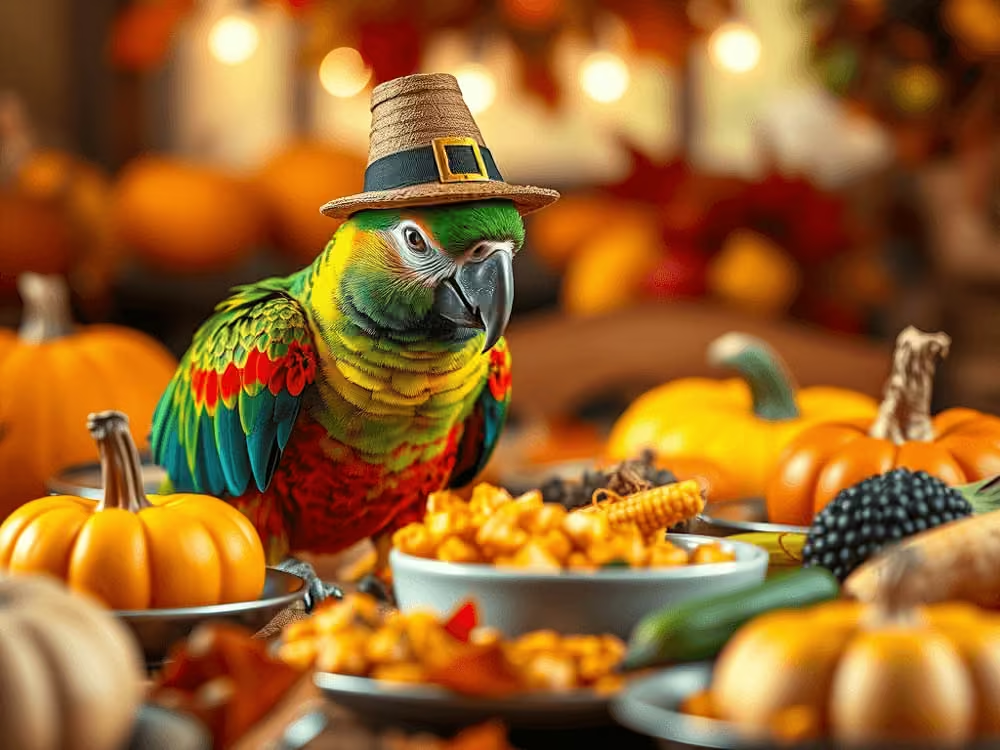





Welcome to our collection of Parrot and Wildlife Rescue Stories, where every feather, paw, and wild-eyed moment tells a tale worth sharing. At Ruffled Feathers Parrot Sanctuary, we document the chaotic, the heartwarming, and the downright hilarious side of animal rescue. For example, you might meet a goose in a hotel lobby or a parrot that tells jokes mid-triage. Meanwhile, our team works day and night to respond to emergencies across the region. As a result, these stories reflect the messy, meaningful reality of sanctuary life. Most importantly, they remind us why this work matters’every rescue has a ripple effect.
Life here starts before dawn and doesn’t really end. You’ll find our team prepping medications, chopping vegetables that could feed a small army, and checking on overnight patients who might have decided 3 AM was the perfect time for a medical emergency. Consequently, coffee flows like a river, and our veterinary bills rival those of a small hospital.
But here’s what you don’t see in the adoption photos: the two weeks of hand-feeding a baby squirrel every two hours, or the creative engineering required to outsmart a cockatoo who’s figured out how to pick locks. Similarly, there’s the 4 AM phone calls about “urgent” situations that turn out to be someone’s pet parakeet hiding under the couch. However, we also get the calls that matter’the ones about injured hawks, orphaned raccoons, and parrots who’ve been surrendered after decades with the same family.
Our emergency hotline never sleeps, and neither do we. Last month alone, we responded to calls ranging from a red-tailed hawk tangled in fishing line to a family of opossums who decided a garage was the perfect nursery. In addition, we had the memorable case of a cockatiel who hitchhiked three states in a delivery truck’apparently, he was quite the conversationalist with the driver.
Each emergency teaches us something new. For instance, we’ve learned that raccoons are surprisingly good at opening latches (and apparently have YouTube tutorials), while parrots will critique your rescue technique mid-operation. Furthermore, every successful release reminds us why we do this work, even when it means sleeping in the clinic with a critical patient or driving two hours at midnight to collect an injured owl.
Our volunteers are the backbone of everything we do, though they’d probably laugh at being called heroes. Take Sarah, who discovered she has a gift for convincing stubborn parrots to take their medication. Or Mike, who built custom perches that our arthritic macaws actually approve of’no small feat, considering how opinionated they are about interior design.
Then there’s the community members who call us when they spot injured wildlife instead of just driving past. These everyday heroes understand that wildlife rehabilitation works because people care enough to get involved. As a result, we see more successful outcomes and fewer animals suffering in silence.
Every animal who walks, flies, or hops back into the wild represents countless hours of care, medication schedules that would make a pharmacy jealous, and the kind of patience that borders on sainthood. Recently, we celebrated the release of a screech owl who spent three months learning to hunt again after a car strike. Meanwhile, a family of orphaned squirrels graduated from bottle-feeding to terrorizing our fruit trees’exactly as nature intended.
The parrots present different challenges entirely. Unlike wildlife, they’re not going back to the forest. Instead, they’re looking for forever homes where their quirks are appreciated rather than merely tolerated. Some of our long-term residents have become sanctuary ambassadors, teaching visitors about responsible pet ownership while demonstrating why parrots make challenging companions.
Our daily routine would probably seem chaotic to outsiders, but there’s a method to our madness. Morning rounds start with the critical care patients, then move through the various species areas where everyone has opinions about breakfast. The parrots, predictably, are the most vocal critics of menu changes, while the wildlife patients prefer their privacy during mealtime.
Cleaning enclosures happens multiple times daily because, frankly, animals are messy houseguests. Meanwhile, medication schedules are coordinated with the precision of air traffic control, and enrichment activities keep everyone mentally stimulated. For example, puzzle feeders challenge the clever corvids, while our parrots get rotation toys that supposedly prevent boredom’though they still prefer shredding important paperwork when given the opportunity.
Every animal we help represents more than just one life saved. These rescues become teaching moments for school groups, conversation starters at community events, and living proof that wildlife conservation happens one animal at a time. When children see a rehabilitated hawk take flight, they understand ecosystem connections in ways that textbooks can’t teach.
Our education programs reach thousands of people annually, spreading awareness about responsible pet ownership, wildlife protection, and habitat conservation. Most importantly, we’re building the next generation of wildlife advocates’kids who know that calling for help when they find injured animals is exactly the right thing to do.
The work never ends, and neither does our need for support. We’re constantly expanding our capacity, training new volunteers, and finding creative solutions to funding challenges that would make a nonprofit accountant weep. However, every successful release, every adoption, and every educational program participant reminds us that this work creates ripple effects far beyond our sanctuary borders.
Future plans include expanding our flight enclosures, developing specialized programs for exotic species, and continuing our community outreach efforts. Because ultimately, the goal isn’t just to rescue individual animals’it’s to create a community that values and protects all wildlife.
Ruffled Feathers Parrot Sanctuary Inc.
Where Hope Takes Flight