Ruffled Feathers Parrot Sanctuary Inc.
Where Hope Takes Flight



The Red-billed Blue Magpie: Southern Asia’s Long-Tailed Show-Off
If you have ever wondered what would happen if a blue jay raided a parrot’s wardrobe and then borrowed a pheasant’s tail, congratulations. You have basically imagined the Red-billed Blue Magpie. Today we are diving into some fascinating Red-billed Blue Magpie facts as we head to the misty mountain forests of Southern Asia to meet one of the most visually stunning and vocally obnoxious corvids on the planet.
Red-billed Blue Magpie Facts About Appearance
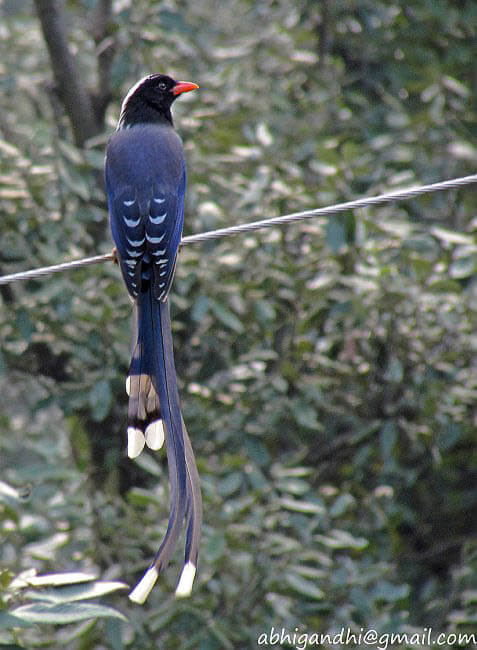
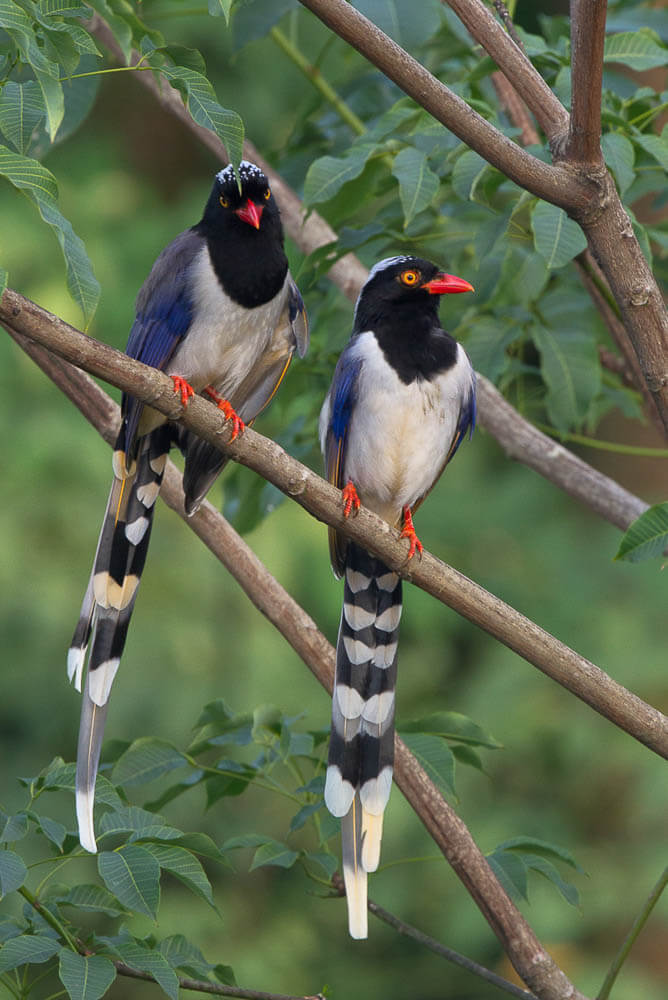
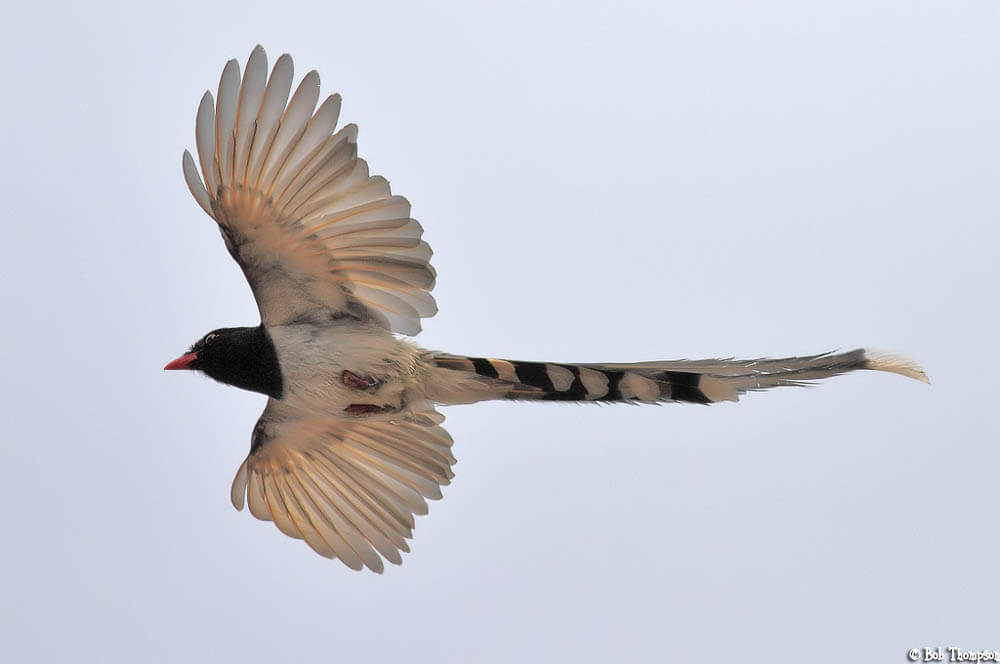
Let me paint you a picture. The Red-billed Blue Magpie (Urocissa erythroryncha) is dressed head to toe in shades of brilliant blue and purple, with a crisp white crown and black face mask that gives it the look of a very fashionable bandit. The bill and legs are a vivid coral red, which is where the “red-billed” part of the name earns its keep. And then there is the tail.
Oh, the tail. This bird carries around a tail that can measure over 17 inches long, which in some cases is longer than its entire body. Imagine walking around all day dragging a feathered streamer behind you and somehow still looking elegant. That is the Red-billed Blue Magpie’s entire personality. Overall, from beak to tail tip, this bird can reach nearly 26 inches in total length, making it one of the longest corvids in the world. It is not a large bird by weight, but it absolutely dominates in the “most dramatic entrance at the bird feeder” category.
Red-billed Blue Magpie Facts About Habitat
The Red-billed Blue Magpie calls a wide swath of Southern Asia home, ranging from the western Himalayas eastward through Nepal, India, Myanmar, Laos, Vietnam, and into parts of southern China. That is a lot of real estate for one bird, but when you look this good, people (and forests) tend to make room.
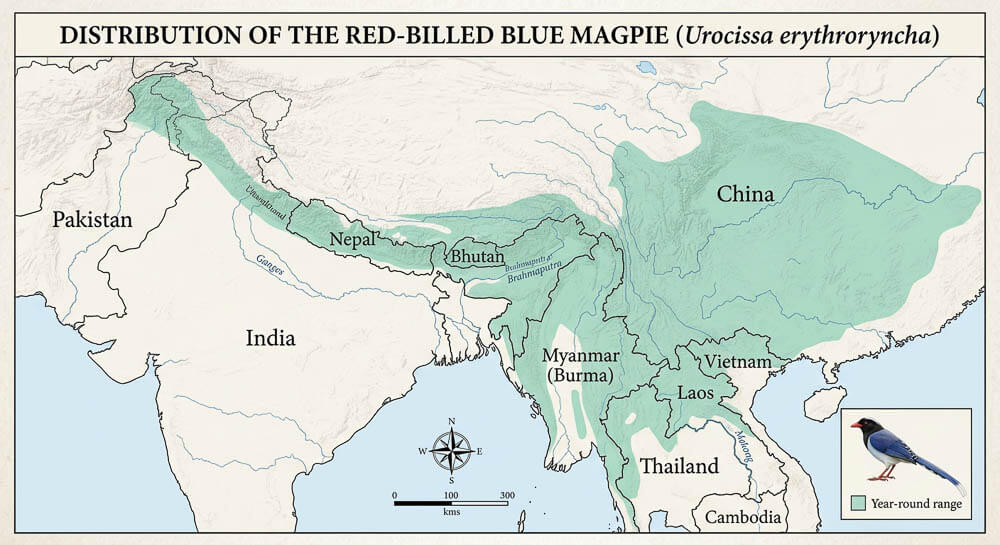
These birds favor broadleaf evergreen and coniferous forests, typically hanging out between 3,000 and 6,000 feet above sea level. They are mountain birds at heart but not the kind that sit on a peak looking philosophical. They make small vertical migrations with the seasons, heading a bit lower in the winter when food gets scarce up top and moving back up as things warm up. Think of it as seasonal apartment hunting, but with more screaming.
Habitat and Daily Life in the Forest Canopy
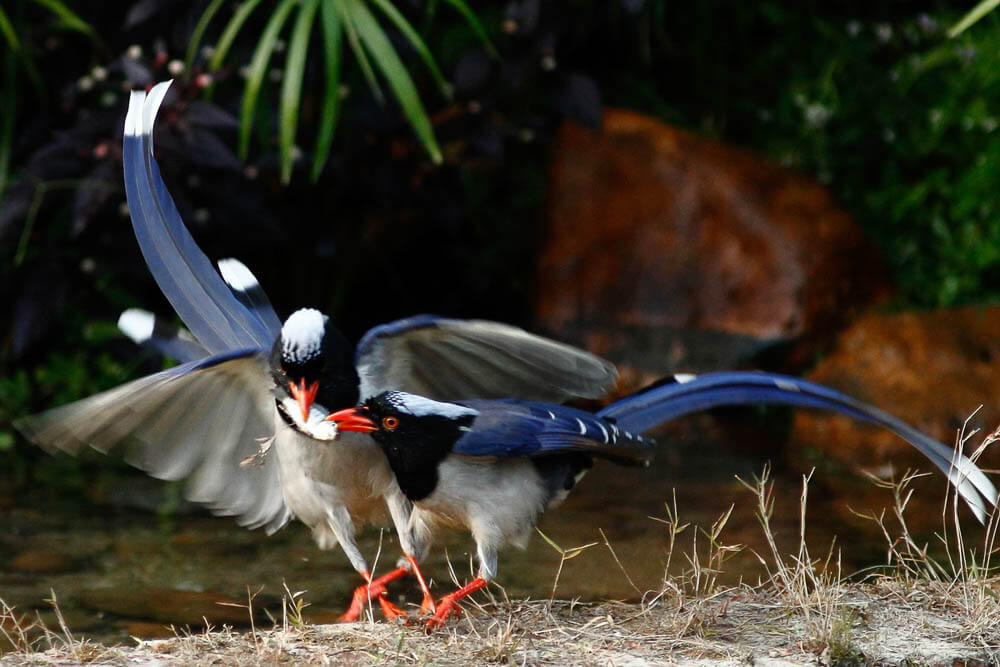
While the Red-billed Blue Magpie is primarily arboreal (that is the fancy word for “lives in trees”), it is not above getting its feet dirty. These birds regularly drop to the forest floor, hopping around with their enormous tails cocked high in the air like a flag while they dig through leaf litter for insects, grubs, and fallen fruit. If you have ever watched a toddler in a grocery store, grabbing everything off the lower shelves, you have a rough idea of how a Blue Magpie forages.
Red-billed Blue Magpie Facts About Diet
The short answer? Pretty much everything. The Red-billed Blue Magpie is a true omnivore with a menu that would make a diner jealous. Insects and grubs form the base of the diet, supplemented by berries, seeds, and fallen fruit. But these birds are not picky vegetarians. They also eat lizards, frogs, small rodents, and yes, the eggs and nestlings of other bird species. I know, I know. It is hard to look at something this beautiful and accept that it is basically a feathered raccoon, but nature does not care about our feelings.
Their foraging style is opportunistic and intelligent, which tracks perfectly for a corvid. These are members of the crow family, after all, and they share that signature corvid cleverness. They will follow mixed-species flocks through the forest, taking advantage of insects flushed out by other birds, and they have been observed caching food for later. Brains and beauty. The full package.
The Voice of the Mountains (and It Is Loud)
Now, about that voice. If the Red-billed Blue Magpie’s appearance is a 10 out of 10, its singing voice is more of a solid 2. These birds are noisy. Like, “your neighbor started a garage band” noisy. Their natural calls include a wide variety of harsh, creaking, and chattering sounds that echo through the mountain forests. Subtlety is not in their vocabulary.
But here is where it gets interesting. Red-billed Blue Magpies are accomplished vocal mimics. They can copy the calls of many other bird species sharing their forest habitat with startling accuracy. Imagine being a smaller bird, minding your own business, and suddenly hearing your own alarm call coming from a giant blue bird with a two-foot tail. It would be like hearing your own voice coming out of a stranger at the grocery store. Unsettling does not begin to cover it.
Red-billed Blue Magpie Behavior and Social Life
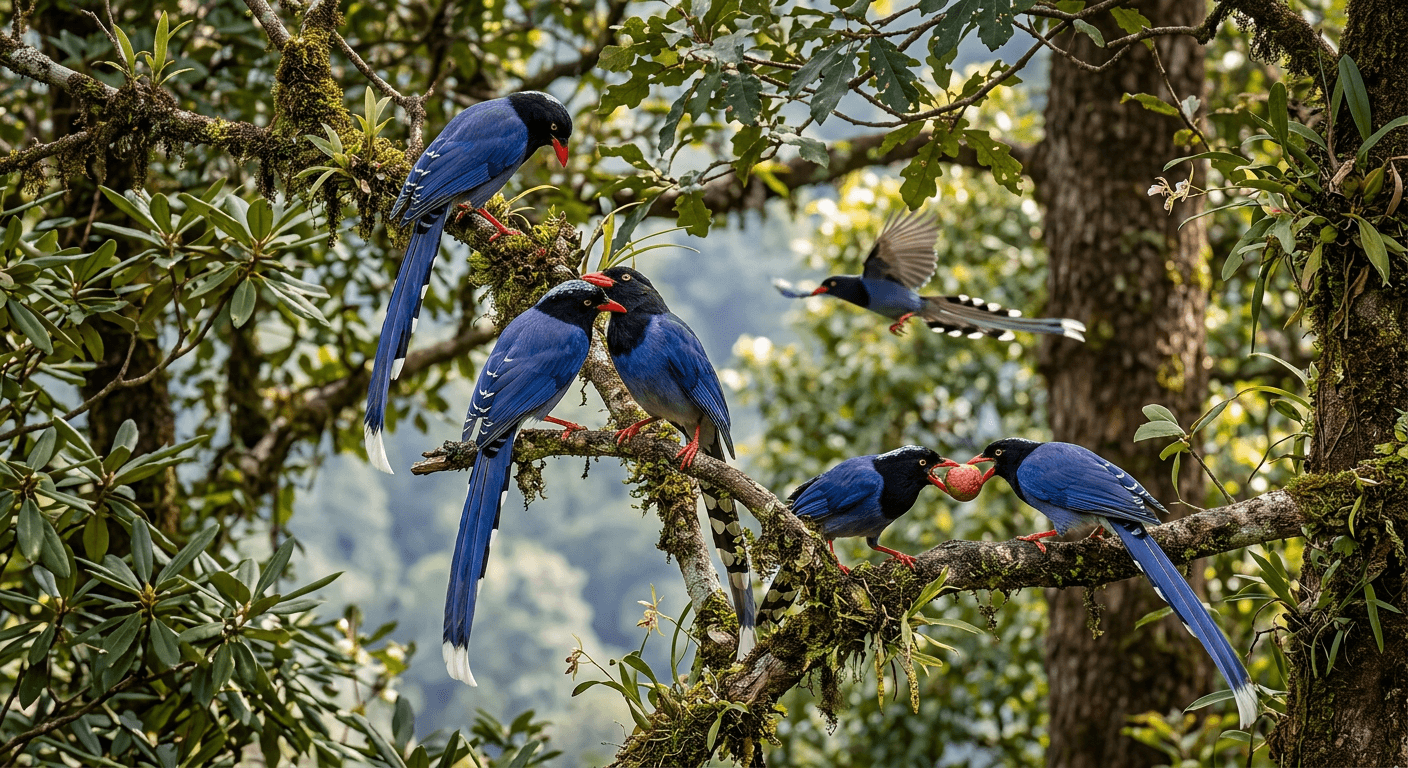
Red-billed Blue Magpies are social birds, often spotted in pairs or family groups of six or seven. They also form larger flocks and frequently associate with other species in mixed feeding parties. This is not because they are friendly. It is because traveling in a group means more eyes watching for predators and more bugs getting kicked up from the forest floor. It is a practical arrangement, not a friendship bracelet situation.
Nesting and Reproduction
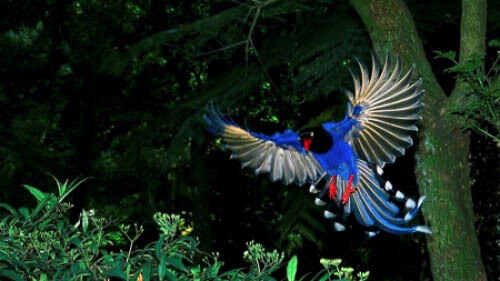
When it comes to raising a family, the Red-billed Blue Magpie keeps things relatively simple. The nest is a shallow, somewhat flimsy cup made of twigs, roots, and leaves, built anywhere up to 20 feet above the ground on wooded hillsides. “Flimsy” might sound like a criticism, but when you have been building nests for millions of years, you earn the right to cut a few corners.
The female typically lays five or six cream-colored eggs with light speckles. Both parents participate in incubation and feeding duties, which is always nice to see. Shared parenting in the bird world is not as common as you might think, so good on you, Blue Magpies.
Conservation Status: Good News for Once
Here is the part of the blog where I get to deliver some rare good news. The Red-billed Blue Magpie is currently listed as Least Concern on the IUCN Red List. Its population is stable across most of its range, and while habitat loss is always a concern in Southeast Asian forests, this species has shown adaptability to secondary growth and disturbed forests. For a bird this gorgeous, that is a relief. Not every beautiful thing in this world needs to be on the edge of disappearing.
Final Thoughts from the Sanctuary
The Red-billed Blue Magpie is one of those birds that reminds you why this series exists. The world is full of absolutely jaw-dropping creatures that most people will never hear about unless someone points them out. That is what we do here at Ruffled Feathers Parrot Sanctuary. We point. We educate. And occasionally, we get screamed at by birds, which honestly feels about right.
Have a wonderful afternoon, everyone.
— Brad
Some of our related content:

Where Hope Takes Flight
Share this:

Discover more from Ruffled Feathers Parrot Sanctuary Inc.
Subscribe to get the latest posts sent to your email.